|
Launch & Demo Day, Raising Capital
|
May 1, 2026
How Founders Raise Millions on Demo Day
The best fundraising tool is not your deck. It is a sixty-second film that keeps pitching for you in every room you cannot walk into. That is how single demo day appearances turn into multi-million dollar rounds.

William Julien
CEO & Director
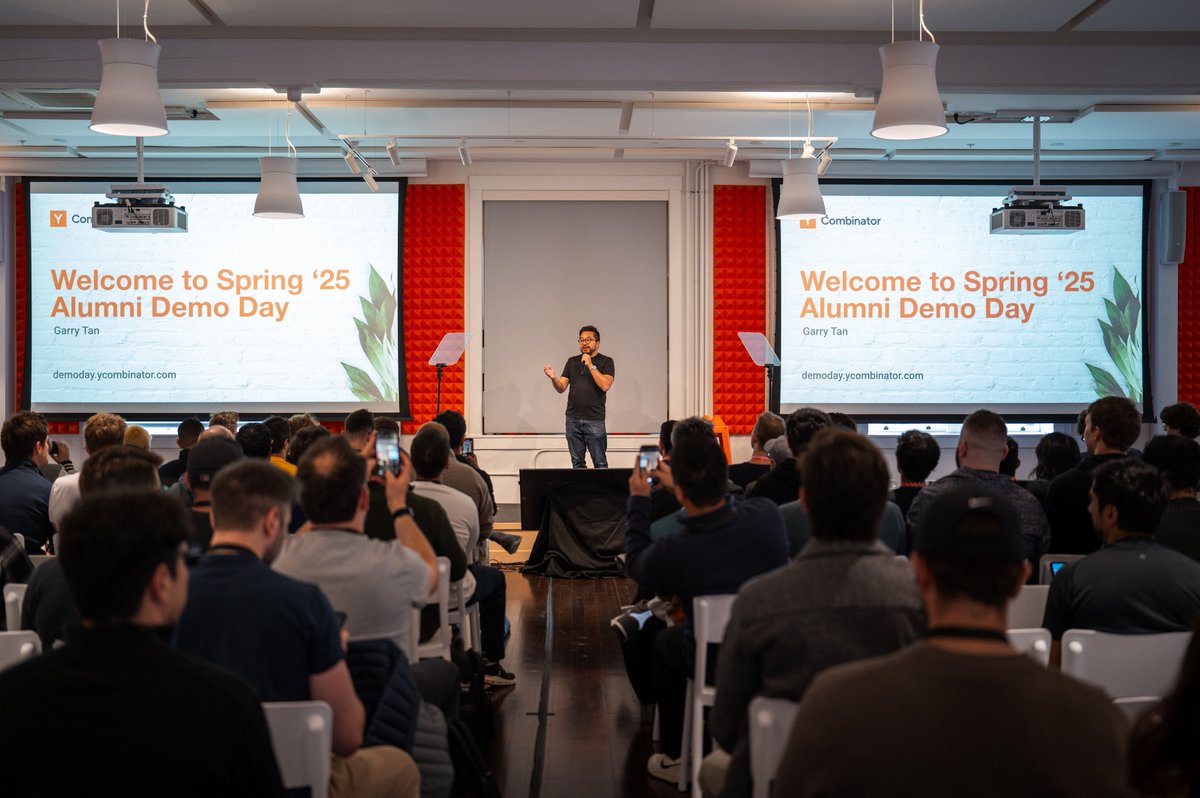
YC X26 Demo Day is in June. By then, every founder in the batch will have spent weeks rewriting a sixty-second pitch, rehearsing it on stage, and trying to figure out how to be remembered by investors who just watched twenty-nine other companies present.
A pitch video is one of the few things that survives that day. It gets opened in follow-up emails, forwarded to partners, played in Monday morning IC meetings. Done well, it does the work of getting you a meeting without you in the room.
Most demo day videos do not work this way. Here is what separates the ones that do.
Why video, not just a deck
DocSend's research has been consistent for years: investors spend roughly two and a half minutes on a pitch deck. That is the entire window in which they decide whether to take a meeting.
Video changes the math. A founder on camera, speaking clearly, in a real environment, communicates something a deck cannot — that you are someone an investor could see themselves backing. Decks tell investors what you do. Video tells them who you are.
The strongest pitch videos are not explainer videos. They are not feature walkthroughs or motion-graphics reels. They are short documentaries about a founder who has found something worth building.
What investors are looking for
Geoff Ralston, the former president of Y Combinator, has written that the goal of a demo day pitch is not to close a check. It is to make the room curious enough to want a meeting. The same logic applies to your video.
You are not communicating everything. You are landing one clear idea, demonstrating credibility, and making the viewer want more.
Three things partners scan for, in this order:
A sentence that lands. What you do, who it is for. If a partner cannot repeat it back to a colleague at lunch, it did not work.
Proof you are the person to do this. This is mostly about presence. Founders on camera, talking the way they actually talk, in spaces that look like their real work.
A signal of momentum. One real customer, one real number, one real moment of the product working. One is enough.
The good videos do less, slower, and trust the viewer.
Five mistakes that kill demo day videos
Motion graphics replacing the founders. A wall of animated icons and floating UI screenshots is the fastest way to look like every other startup. If your video could be re-skinned for any company in your batch, it is not a brand video. It is a template.
A voiceover that sounds like a brochure. "In a world where..." Generic, padded, sentimental. The voice should sound like the founder thinks, not like a corporate narrator reading bullet points.
Burying the product. If investors need to understand what the product does, show it doing it. One clean moment of the product working is worth thirty seconds of conceptual b-roll.
No human on screen. Founder presence is the hardest thing to fake and the easiest to verify. Investors are betting on people. Show the people.
Imitating Apple. Apple's brand language works because Apple has spent forty years earning it. A pre-seed company doing a beat-for-beat Apple homage signals imitation, not vision.
What works
The pitch videos that earn meetings share a few qualities.
They are shot like short films, not commercials. Real locations, natural light when the location allows it, a small crew that does not disrupt the work happening on set. The founder is doing something on camera — building, demoing, talking to a customer — not standing in front of a backdrop reciting lines.
They use silence. Wall-to-wall voiceover and music feels desperate. The strongest moments are often quiet ones: a hand on a keyboard, a customer's reaction, a pause before the founder says the thing that matters.
They have one clear arc. Most pitches collapse from trying to communicate too much in too little time. A single emotional through-line carries more weight than five competing ones.
They look like the company. Pacing, color, music, and typography are downstream of who the founders are. A medical AI company should not sound like a crypto company. A developer tool should not look like a consumer brand.
Case study: Flowy AI
Flowy AI builds an AI-powered sign language recognition platform. When their team came to us, the obvious move was a tech demo: close-ups of the model running, UI overlays, a confident voiceover walking through the architecture.
We made the opposite.
The film opens on a person signing. No studio, no diagrams, no narration: a real moment of communication, the kind that happens millions of times a day and stays invisible to most hearing people. The product enters the story quietly. The camera recognizes the signing, translates in real time, and the conversation continues.
The voiceover is short. The pacing is calm. The product appears, but the focus stays on the person on the other side of it. By the end, the viewer understands what Flowy is, who it is for, and why it matters, without being told.
That is the job of a demo day video: make the viewer understand something, feel something, and want more. The full film is on our projects page.
Common questions
How long should the video be? Sixty to ninety seconds for the hero cut. We typically deliver multiple lengths from one shoot — a thirty-second version for cold outbound, a sixty-second cut for the website and follow-up emails, a longer cut for the deck appendix. Different audiences, same source material.
When should I start? Six to eight weeks before you need it. That allows for a real creative process, a proper shoot, and an edit that is not rushed. If your demo day is in June, the time to start is now.
Do I need to be on camera? Yes, almost always. Investors are betting on you. Removing the founders from a pitch video is the fastest way to weaken it.
What does it cost? It depends on scope. The right starting point is a conversation about what the video needs to do.
Where will it live? Website hero, investor follow-up emails, deck appendix, LinkedIn launch post, the founder's pinned tweet. One asset across many surfaces.
The takeaway
A demo day video is a fundraising asset, not a marketing deliverable. Founders who treat it that way, investing in real production, real founder presence, and a real story, end up with a tool that keeps working long after they walk off the stage.
If you are preparing for X26, S26, or another demo day this year and want to talk through what your video could look like, we are based in San Francisco and Los Angeles. Get in touch.
|
Newsletter
|
Monthly updates
Stay in the Loop
Join our Newsletter for insights, design inspiration, and marketing strategies that help modern brands grow.