|
Marketing & Storytelling
|
Jun 24, 2026
The Authenticity Premium: What Cannes Lions 2026 Revealed About Brand Video
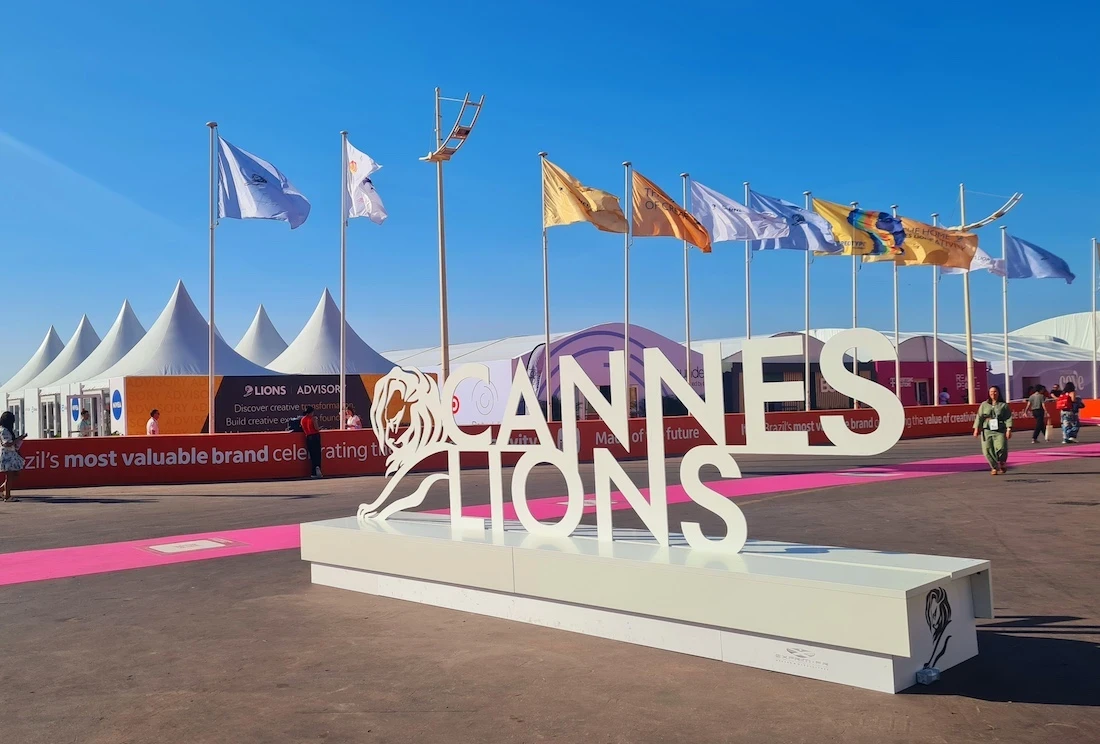
This week the advertising industry gathered on the French Riviera for Cannes Lions, the festival that has always worked as an early read on where the business is heading. For two years running, the conversation there was dominated by what AI could do. This year the mood shifted, and the shift is worth paying attention to if you are a company deciding how to make your next video. The headline from Cannes 2026 is not that AI has taken over creative work. It is that the industry has decided where AI belongs, and where it does not. As generative tools make video faster, cheaper, and more abundant than ever, the thing that has become scarce, and therefore valuable, is the human judgment and authenticity that no model can produce. The festival gave that idea a name it did not have before. Call it the authenticity premium.
William Julien
CEO & Creative Director
What changed at Cannes this year
The debate at Cannes was never really about whether AI can make good video. Everyone in the room already knew it can, at a speed and volume no human team can match. The argument was about authorship and accountability, about which parts of the work a machine can own and which parts it cannot.
The emerging consensus, shaped by jurors and brand leaders across the festival, landed in a clear place. AI has earned its seat at the production table, but not at the strategy table. The festival even restructured its awards around the distinction, introducing AI Craft categories that recognize work where the technology serves the idea rather than the other way around. Technical polish, the thing AI delivers most easily, is now treated as a baseline expectation. The work that wins is judged on the quality of the human thinking underneath it.
The people running the largest brands said the quiet part out loud. The chief marketing officer of Autodesk described AI as raising the floor for everyone while human ingenuity remains the thing that lifts the ceiling. The documentary filmmaker Lauren Greenfield, speaking at the festival, noted that AI is genuinely useful for organizing footage, transcribing, and roughing out a first cut, but that it does not touch the human part of the work, and that authenticity is being valued more now than ever. Virgin Voyages put it most plainly with an internal pledge: when they can send a real person to film something real, they will choose that over generating it.
The data behind the premium
This is not just the sentiment of an industry protecting its own. The audience is driving it.
A 2026 Clutch report found that 97 percent of consumers consider authenticity a key factor in deciding whether to support a brand, and that 81 percent have stopped supporting a brand that no longer felt genuine to them. Audiences have also grown sharp at spotting the synthetic. Recent industry research found that 62 percent of consumers believe they can detect AI-generated content in brand campaigns, while only 14 percent of brand teams have any policy defining what human creative involvement should look like. That gap, between what audiences can sense and what brands have prepared for, is exactly where trust gets won or lost.
The pattern shows up everywhere AI-made content has flooded a feed. As the volume of automated video rises, consumer trust becomes the scarce currency, and viewers have become noticeably allergic to anything that feels soulless or machine-made. Abundance lowered the value of competent video. It raised the value of video that feels like it came from a real person with something real to say.
Why this matters more for startups than anyone
For an early-stage company, the authenticity premium is not an abstraction. It is leverage.
A startup begins with a trust deficit. Nobody knows the name, nobody is sure the product works, and nobody knows whether the founders will still be standing in a year. Peer-reviewed research has consistently found that video which is clear, useful, and engaging raises consumer trust, and that trust is what moves people toward a decision (Luo et al., 2025). Other work has shown that video helps people picture how a product works, which drives intent to buy (Orús, Gurrea & Flavián, 2017). Video closes the trust gap faster than any other format, which is precisely why it matters how the video is made.
Here is the part most founders miss. In a market where competitors can now generate a polished product video in an afternoon, a generated video no longer signals much of anything. Everyone has access to the same tools and the same templated polish. What a real film communicates, a founder actually on camera, a real customer, a moment that obviously happened, is the one thing a competitor cannot copy with a prompt. The authenticity premium means the human-made film is no longer just the nicer option. It is the one that still carries a signal.
What authentic actually means in practice
Authenticity has become a marketing buzzword, which is exactly the kind of thing Cannes audiences now reject on sight. It is worth being concrete about what it means in a video.
It means the founders are present and speaking the way they actually speak, not a voice actor reading a polished script. It means the product is shown doing something real rather than rendered in an idealized simulation. It means the story is built around something true about why the company exists, developed by people making deliberate choices about what to keep and what to cut. None of that rules out using AI. The smartest teams use it the way Cannes endorsed, for the parts where it genuinely helps, while keeping human hands on the story and the strategy. The line is simple. The machine can help make the thing. It cannot be the reason the thing is worth trusting.
What this looks like in our work
For Speakology AI, we produced a brand film during their raise, built around the founders and their actual results. After it went out, their investor reply rate rose by 86 percent, and the round closed at 120 percent above the original ask.
For Flowy AI, an AI sign language recognition platform, we built the launch around a real human moment of communication rather than a feature tour. The film drew more than 350,000 views across social platforms and helped bring over 45,000 demos and new customers onto the platform, with no paid advertising behind it.
Fuse AI used their film in investor outreach as part of a successful $3 million seed raise. The brand film we made for the Horological Society of New York premiered at their 160th Anniversary Gala, an event that raised $1.2 million. And when Auxos launched with our film, the founders saw the response they were after, with a strong wave of engagement and a steady run of demos booked off the back of it.
None of these came from a template or a prompt. They came from real people, captured well, telling a true story. That is the premium the industry just spent a week in Cannes affirming.
The takeaway
The verdict from the industry's biggest stage is that as AI makes video infinite, the human-made film becomes the thing that stands out and the thing people trust. For a startup trying to earn belief from strangers, that is not a constraint. It is an advantage, and it is one the founders who understand it will use while everyone else is still generating variations of the same forgettable clip.
If you are planning a launch or a raise and want a film that carries that signal, we are based in San Francisco and Los Angeles. Get in touch.
Sources
Coverage of Cannes Lions 2026 (June 22 to 26) on the festival's AI authenticity debate, the new AI Craft categories and Creative Brand Lion, and remarks from brand and creative leaders including Autodesk, Uber, Virgin Voyages, and filmmaker Lauren Greenfield (Fortune, TIME, Advertising Week, Influencers-Time, IdeaFoster).
Clutch (2026), via Fortune's Cannes coverage, on consumer authenticity: 97 percent citing it as a key factor in supporting a brand and 81 percent having abandoned brands that no longer felt genuine.
Industry research on consumer detection of AI-generated content (62 percent) versus brand readiness (14 percent with a human-involvement policy).
Luo, C., Mohd Hasan, N. A., Ahmad, A. M. Z., & Lei, G. (2025). Influence of short video content on consumers' purchase intentions on social media platforms with trust as a mediator. Scientific Reports, 15, 16605. https://www.nature.com/articles/s41598-025-94994-z
Orús, C., Gurrea, R., & Flavián, C. (2017). Facilitating imaginations through online product presentation videos. Electronic Commerce Research, 17(4), 661–700. https://doi.org/10.1007/s10660-016-9250-7
Horizon Studios is a brand film and cinematic video studio for technology companies, based in San Francisco and Los Angeles. Recent work includes Speakology AI, Flowy AI, Fuse AI, and HSNY. See the full portfolio at horizonstudios.us/projects.
|
Newsletter
|
Monthly updates
Stay in the Loop
Join our Newsletter for insights, design inspiration, and marketing strategies that help modern brands grow.